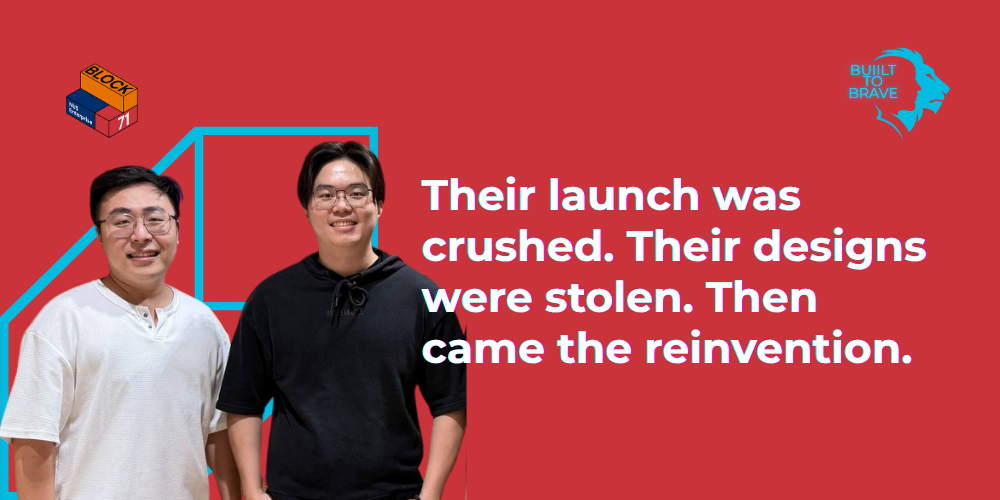
Their launch was crushed. Their designs were stolen. Then came the reinvention.
Dear friend of the block,
What would you do if you spent years training to reshape how people experience the world, only to discover the industry you chose had no room for that dream?
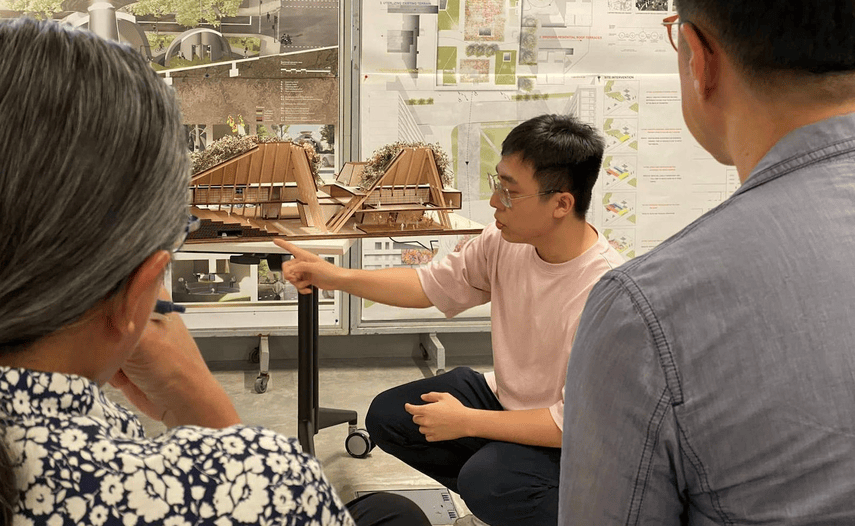
Chen Jiahao trained to be an architect with a straightforward ambition: build things large enough to matter. “I wanted to do something impactful for mankind,” he says. “Back then, buildings seemed like the largest thing I could build.
Kang Shiqiang came at it from a different angle: a lifelong love of combining science and art, and a belief that the spaces people inhabit are the very things that shape their lives. Architecture, he thought, was his chance to curate those experiences.
Both arrived at university buzzing with possibility. Both left with a sobering education in how the industry actually works.
In Singapore, the path to becoming a qualified architect is long and rigidly hierarchical. You study, intern, log years of experience, and sit for a certification exam before you’re permitted to call yourself an architect. Once in, young practitioners spend their first 3 to 5 years with very limited say in design decisions, watching their ideas get overruled by numerous factors.
The Pivot Nobody Planned
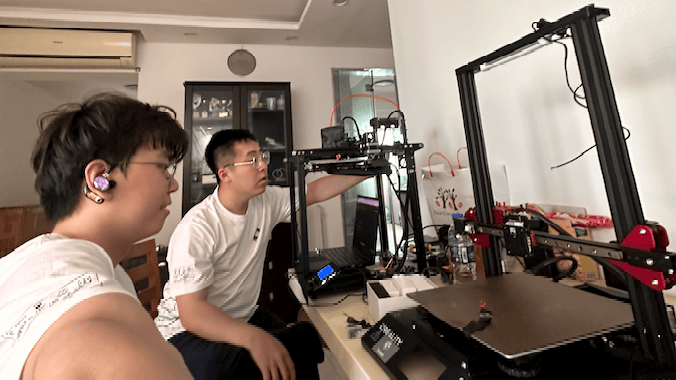
But out of frustration came ingenuity. In school, Jiahao had quietly pioneered the use of 3D printing, convincing sceptical professors that a machine could legitimately serve as a design tool. Word spread and classmates bought their own printers to help with design output.
But the machines broke. Constantly. And people started showing up at Jiahao’s home to get their machines fixed. “We were troubleshooting 3 to 4 machines each night, all the way till a week before submission deadlines,” – a grind neither of them had signed up for.
Shiqiang and Jiahao saw a gap: affordable and reliable 3D printing machines good enough for tertiary education projects. And what started as informal repair work – $50 an hour, no business plan, just two people who knew how to coax a machine back to life – grew into something they couldn’t ignore.
The duo decided to build their own line of 3D printers, aspiring to become the DJI of desktop 3D printers. So they went to China to source for parts and came back with five functioning prototypes.
Then one month before launch, Bambu Labs, backed by a former DJI senior executive with a ready supply chain and deep investor relationships, ran a Kickstarter project that raised millions in two weeks. Their machine won international design awards and was lauded as “the iPhone of 3D printers.”
“We were like ants fighting giants.” Shiqiang knew deep down that they had been outcompeted in a flash.
The Insight That Changed Everything
At this point, most people would have walked away entirely. But Shiqiang and Jiahao walked sideways and found something hiding in plain sight.
While doing fabrication work for a client, they kept bumping into the same uncomfortable question: what happens after? They would deliver a physical artefact and then, nothing. No follow-up. No learning. No data. Just a job done and an invoice sent.
It reminded them of architecture school, where months of work were discarded the morning after a critique. “We asked ourselves: why are brands with established identities building events the same way architecture students build semester models? One and done, every time.”
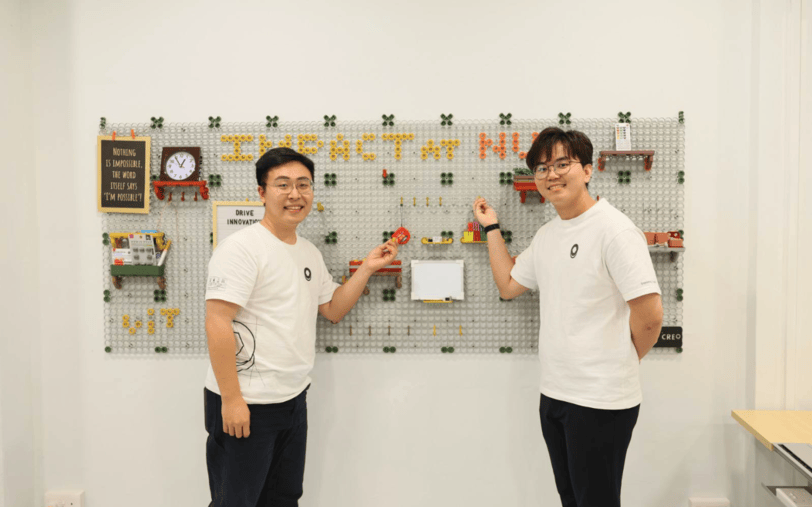
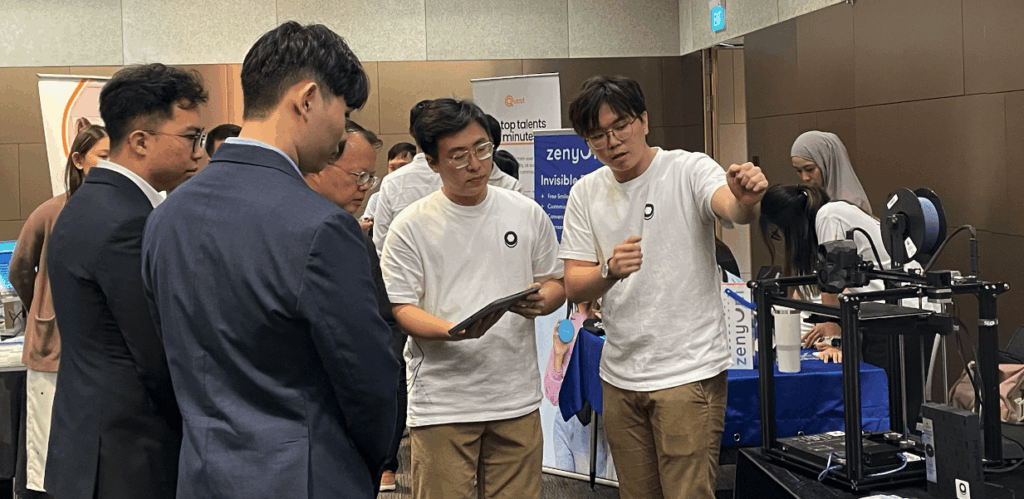
That question became Creo Farm, a design startup building data-driven event infrastructure.
Building the Data Layer Behind Every Event
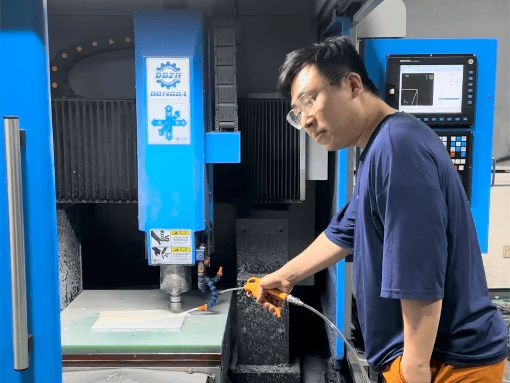
Today, Creo Farm sits at an unlikely intersection: spatial design, manufacturing, and data.
The company designs and produces bespoke modular installations for brand activations and events; and embedded within each piece is a layer of intelligence that most event companies simply aren’t offering.
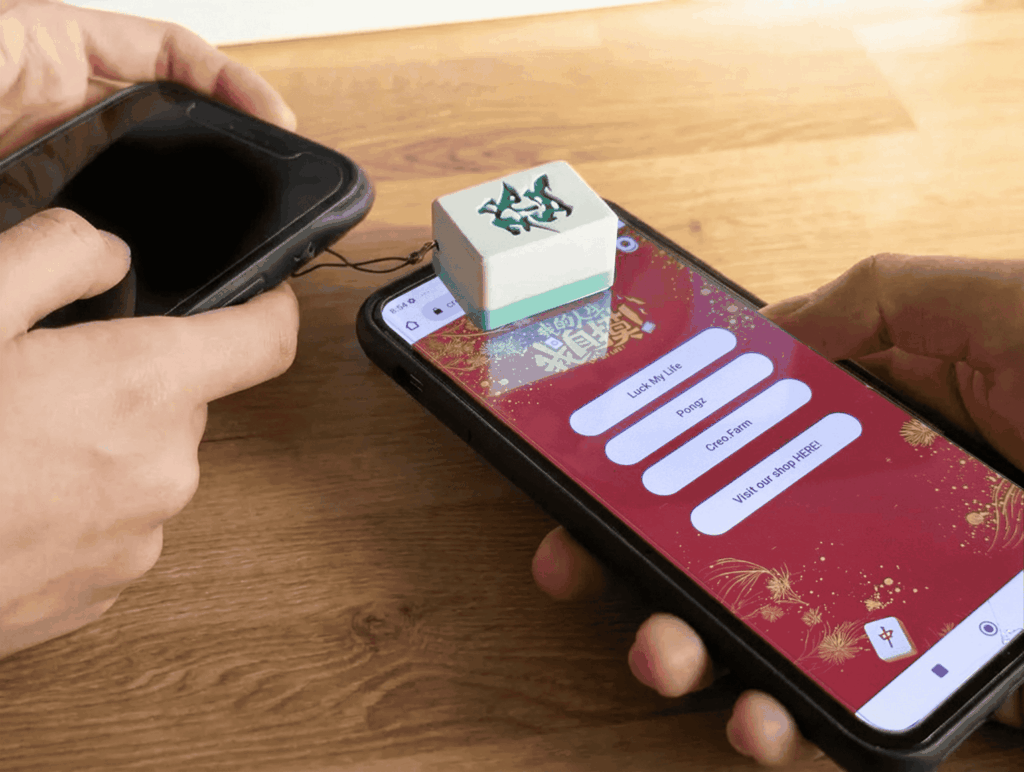
Think encrypted NFC chips layered directly into custom 3D-printed props, linked to gamified experiences that give visitors a reason to engage. Think AI-powered cameras and sensors that track exactly which parts of a brand’s booth are actually generating interest, and which are just furniture. This way, brands walk away from an activation with something they’ve never had before: real engagement data they can act on.
The modular approach is equally deliberate. For a recent installation for Boeing, the team needed to produce a two-metre piece, far beyond the range of a standard desktop printer. Rather than outsource, they broke the structure into seven interlocking 300mm modules, each carrying electricity and signal through the joints. Lego logic, applied to commercial-scale brand experiences.
Still Learning Tricks To The Trade
The road hasn’t been without its humbling moments. At one point, the founders were in deep conversations with a multinational client, the kind of contract that could have changed the trajectory of the company entirely. They went all in: detailed designs, custom concepts, hours of back-and-forth. The middleman coordinating the project was enthusiastic.
Then, without warning, the deal went quiet. When the project eventually surfaced, their designs had found their way to another supplier. Creo Farm had been cut out entirely.
“We didn’t even know that was something that could happen.” Shiqiang shakes his head at the memory. “We walked in as designers and walked out as a reference library for someone else’s pitch.”
The Blueprint Ahead
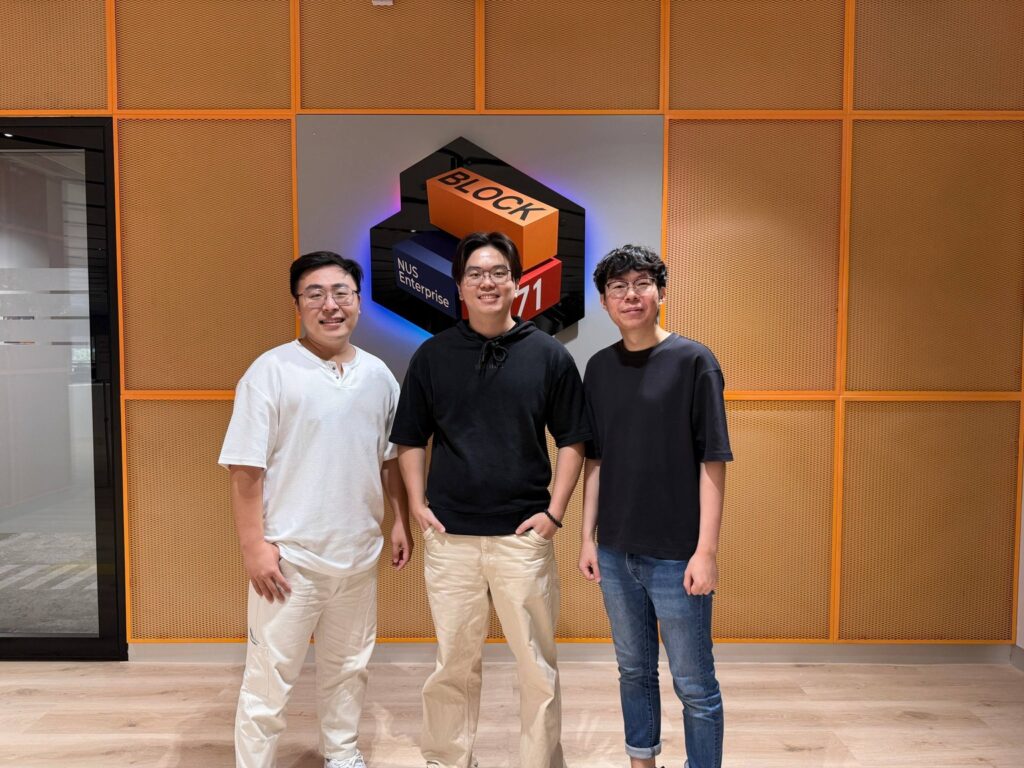
Creo Farm is now part of the BLOCK71 community, building the kind of data moat that compounds over time: every event they run generates insights that sharpen the next one. In a space where most agencies still measure success by headcount and Instagram reach, that’s a different game entirely.
For two architects who once spent their nights fixing other people’s machines, the ambition hasn’t changed. They still want to build things that matter, and they are building them in a unique niche they’ve created for themselves.
What’s your niche?
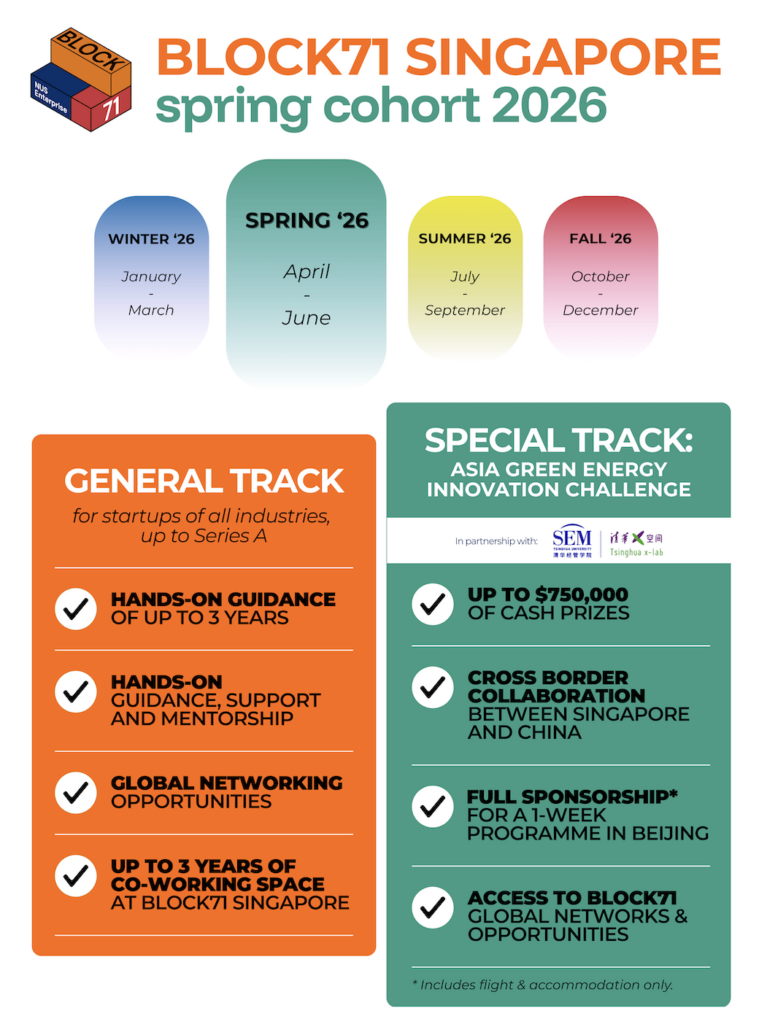
Start Building. Apply for Spring Cohort 2026