How This Team Is Reinventing Coffee Without Cafés
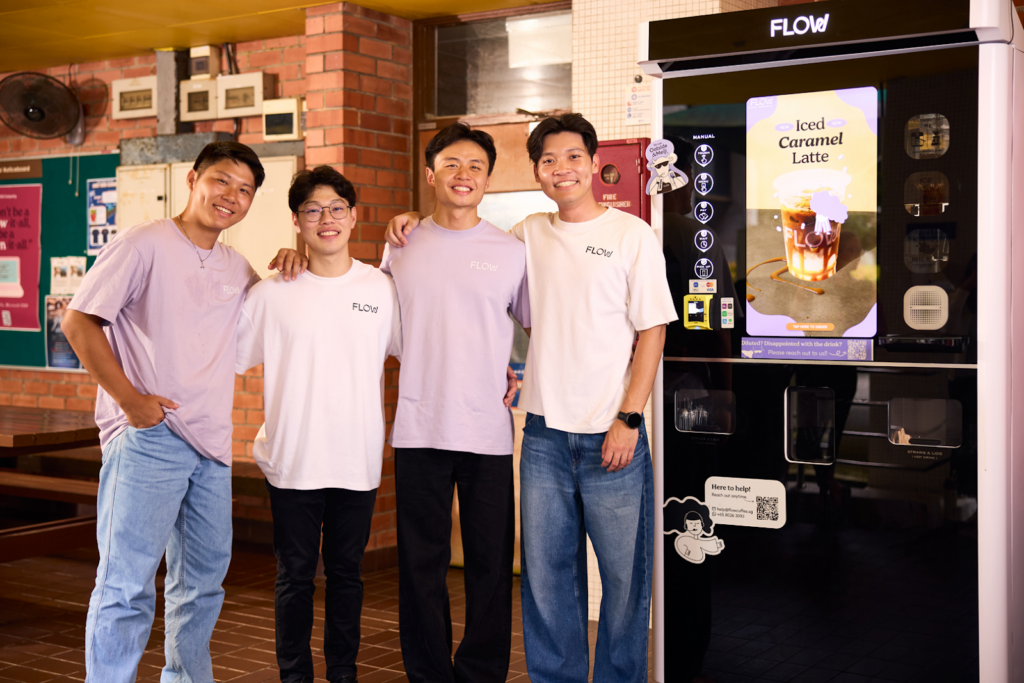
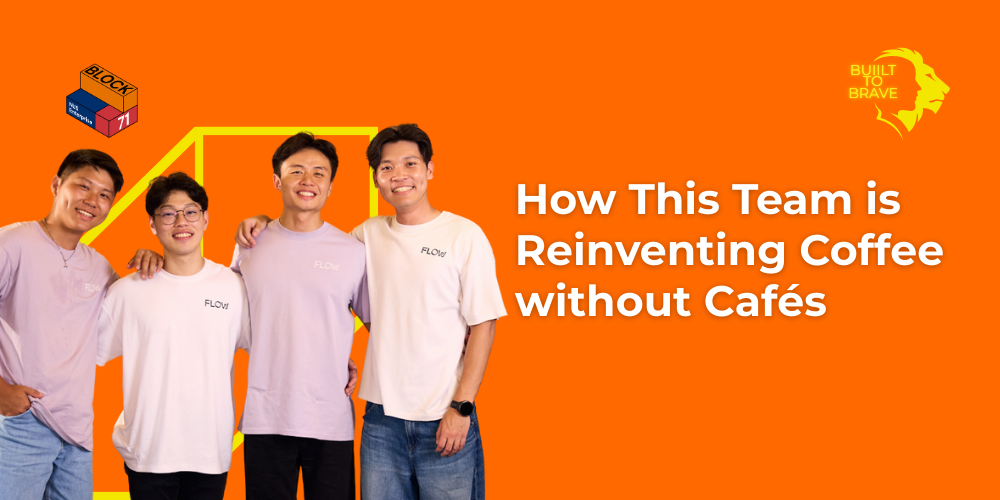
Flow Coffee’s founding team, from left to right: Zhang Qingyuan (Chief Marketing Officer); Jacky Pu (Chief Product Officer); Chang Wei Sheng (Founder, CEO); Jarran Ng (Co-Founder, COO)
The problem was personal. Chang Wei Sheng spent his university days nursing cup after cup of specialty coffee through marathon study sessions, not because he had a more refined palate, but because good coffee actually worked. “A good cup of coffee can last me the whole day,” he explains. “Whereas for kopitiam coffee, I don’t get that kick.”
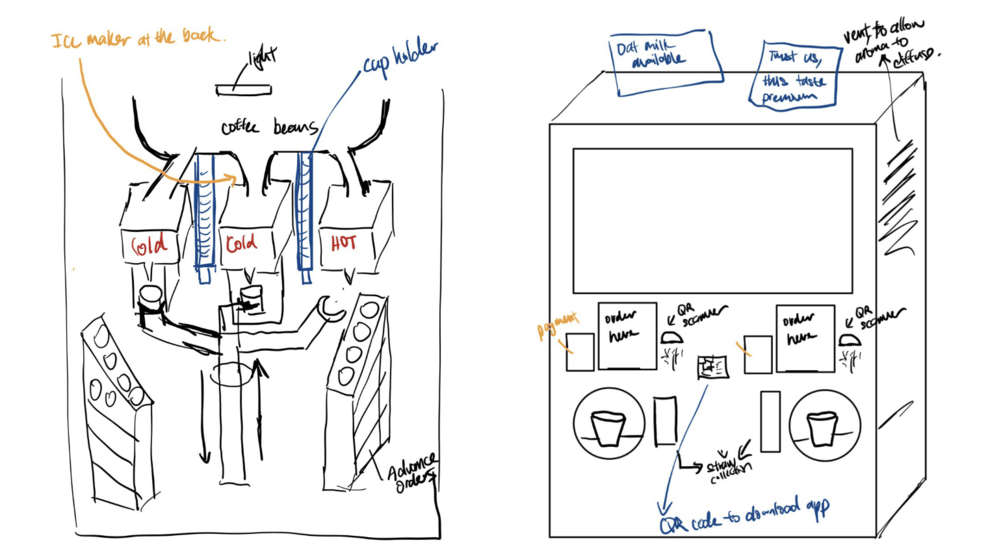
But Singapore’s cafe economics made his habit unsustainable. High overhead costs meant cafes struggled, and convenient coffee meant compromising on quality. In October 2023, while still working full-time in computing, Wei Sheng started sketching designs for something that didn’t exist: a public vending machine that could make proper specialty coffee with fresh milk. Existing machines use creamer instead of fresh milk to make it easier and cheaper to operate.
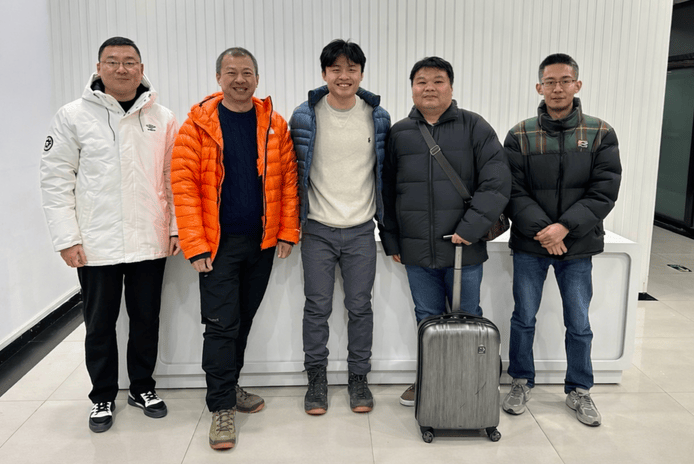
Armed with his designs, a huge dose of optimism and without a team, Wei Sheng flew to China solo in search of a manufacturing partner that could bring his vision to life.
His research led him through Japan (too advanced or too outdated), Korea (using Chinese machines anyway), Taiwan, Indonesia, and Malaysia. Everything pointed to China, specifically to manufacturers on Alibaba. But getting Chinese manufacturers to take a young Singaporean engineer seriously proved harder than finding them.
“What will make them want to sit down with me for three or four hours talking about designs?” Wei Sheng wondered. His solution: creative storytelling. He contacted his father’s friend who ran an instant coffee company and asked to use their company details. To the Chinese factories, he presented himself as the lead of a dedicated team for a large coffee company’s new venture.
The Patent They Should Have Secured
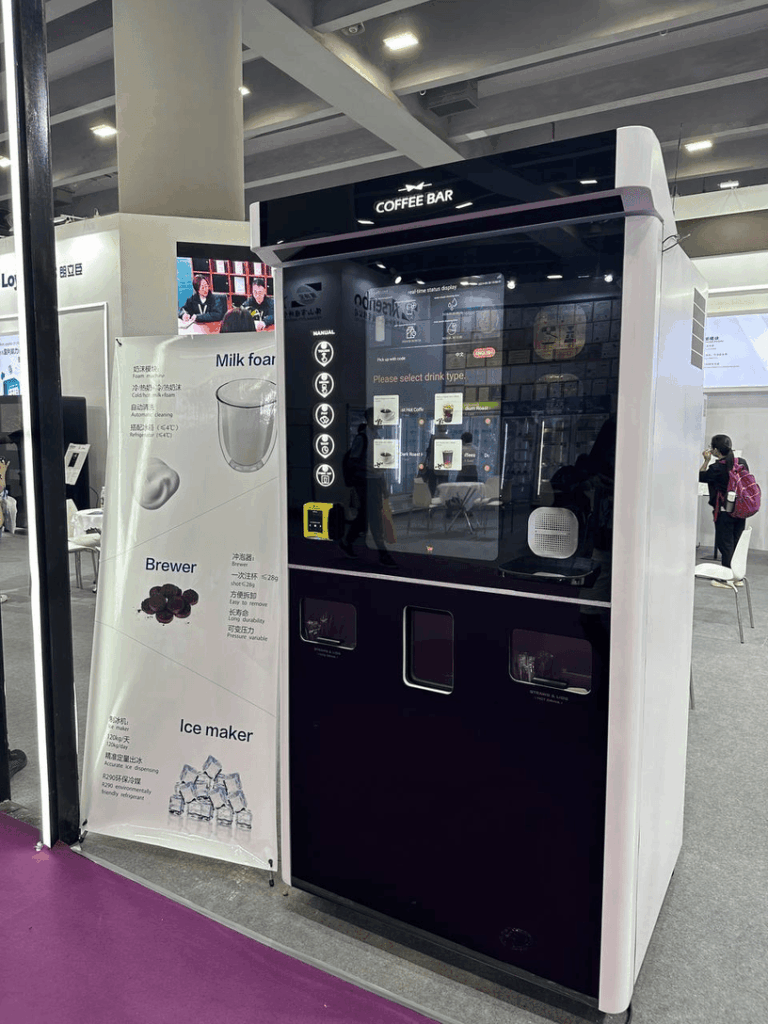
A trade show in Guangzhou changed everything. When Wei Sheng flew in to see the completed prototype, bringing his own beans for testing, the machine attracted immediate interest from other buyers.
His Chinese partner’s priorities shifted overnight.
“I thought there was loyalty because I co-developed this idea with them,” Wei Sheng reflects. “But many others want this piece of technology and at the end of the day business is warfare.” Negotiations that had started at 30 machines dropped to 15, then 12. Finally, the manufacturer offered a stark choice: take one machine with no exclusivity rights, or walk away.
Wei Sheng took the machine. The patent stayed in China.
“I still believe we made the wiser decision because the technology wasn’t proven yet, and so spending capital on patents before validating the business would have been premature,” he said.
“Anyone can copy hardware,” he adds. “But the data you obtain from running real operations on the ground, that’s what compounds and that’s more valuable. We’ll come back for the patent later.”
Building Differently
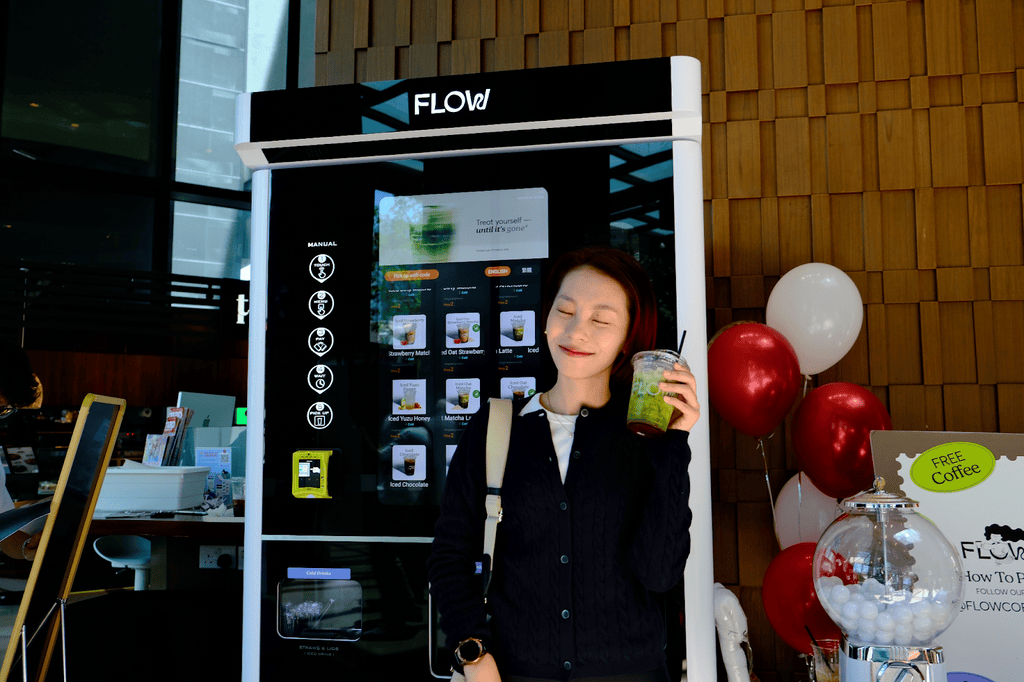
Seven months in, Flow Coffee today runs 20 machines in Singapore with a team of six people – scalability that traditional vending operators considered impossible for fresh-milk systems. Their machines work perfectly well with oatmilk, too.
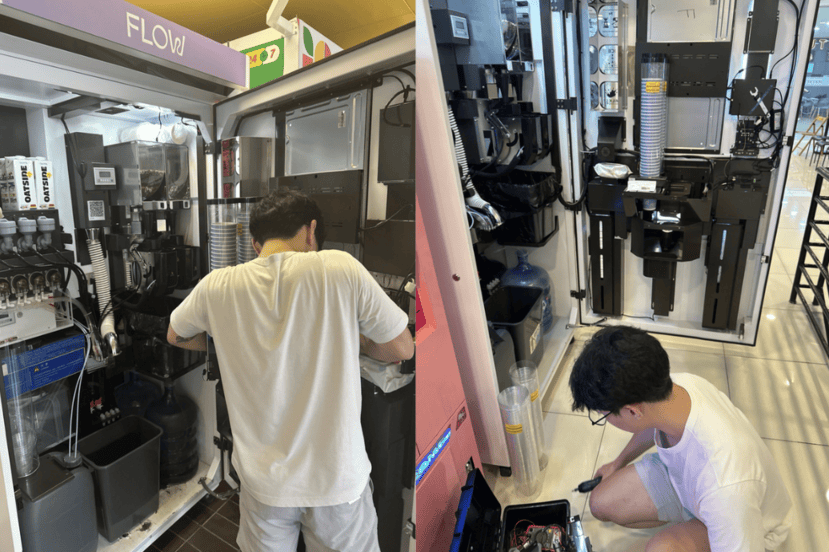
The secret isn’t just hardware but how they’ve automated operations that usually require constant human intervention.
Chief Product Officer, Jacky Pu, brings eight years of specialty coffee expertise, having worked in cafes. He initially hand-blended matcha the traditional way: mixing powder, sugar, and hot water into liquid form for each batch. Now they use automation tools and dissolvable premixes, freeing the team to focus on expansion rather than daily preparation.
Along the way they’ve learned through expensive experiments: condos don’t work yet and morning commuters won’t stop for coffee even when machines are positioned at shuttle bus pickup points. But corporate offices eliminate rental costs, and some companies subsidise drinks for employees. Amidst all this, BLOCK71’s network has introduced Flow Coffee to CapitaLand and other enterprises, exactly the B2B partnerships that make their unit economics work.
Relentless iteration towards perfection
The team understands the risks of hedging the entire business on the initial prototype and insists on rapid optimisation through operational learning. From improving cup stability with 3D-printed shock absorbers to refining machine workflows, each iteration brings them closer to a deeper understanding of what it takes to design and manufacture robust coffee systems at scale.
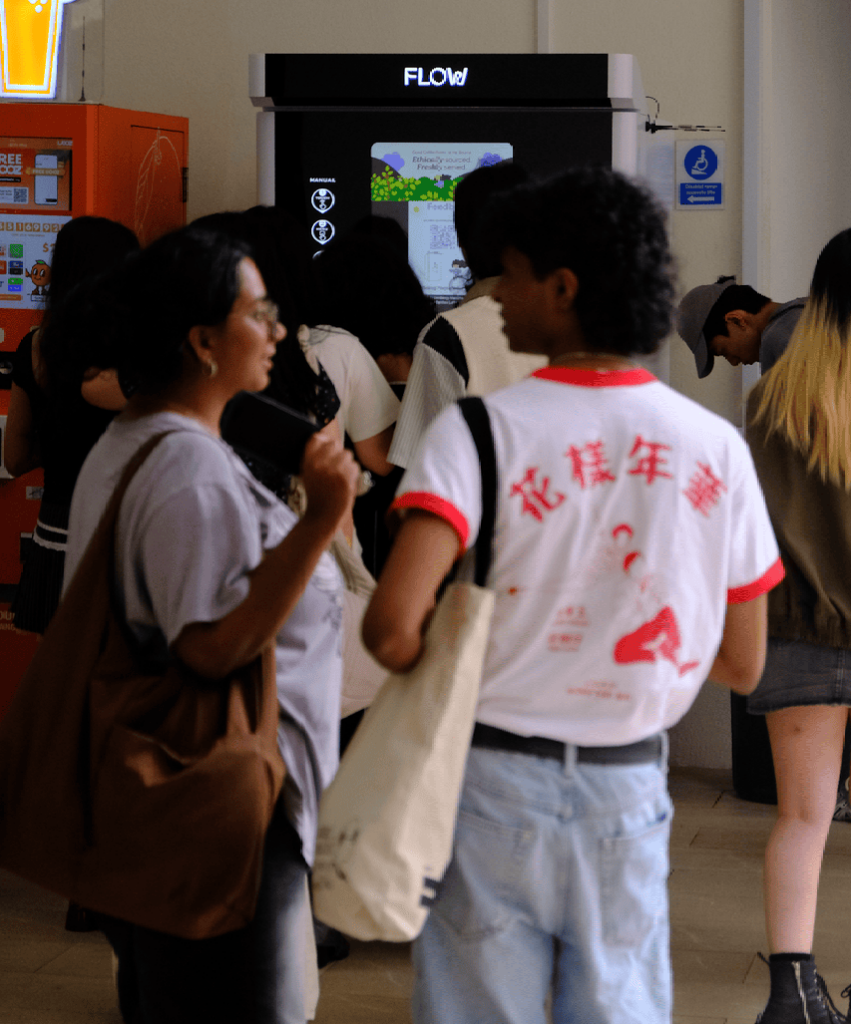
“People don’t expect much from vending machines, we’re here to prove they can deliver café-quality drinks,” Wei Sheng says. “Our whole team has been trying to push that perception change.”
That perception shift is working, one specialty coffee at a time, dispensed from machines that didn’t exist until 2025. In an era of AI hype, the Flow Coffee team joins an emerging group of founders who prefer to transform unsexy, old-school businesses with a refreshed view of tech-enabled operations.
Will you be joining them?
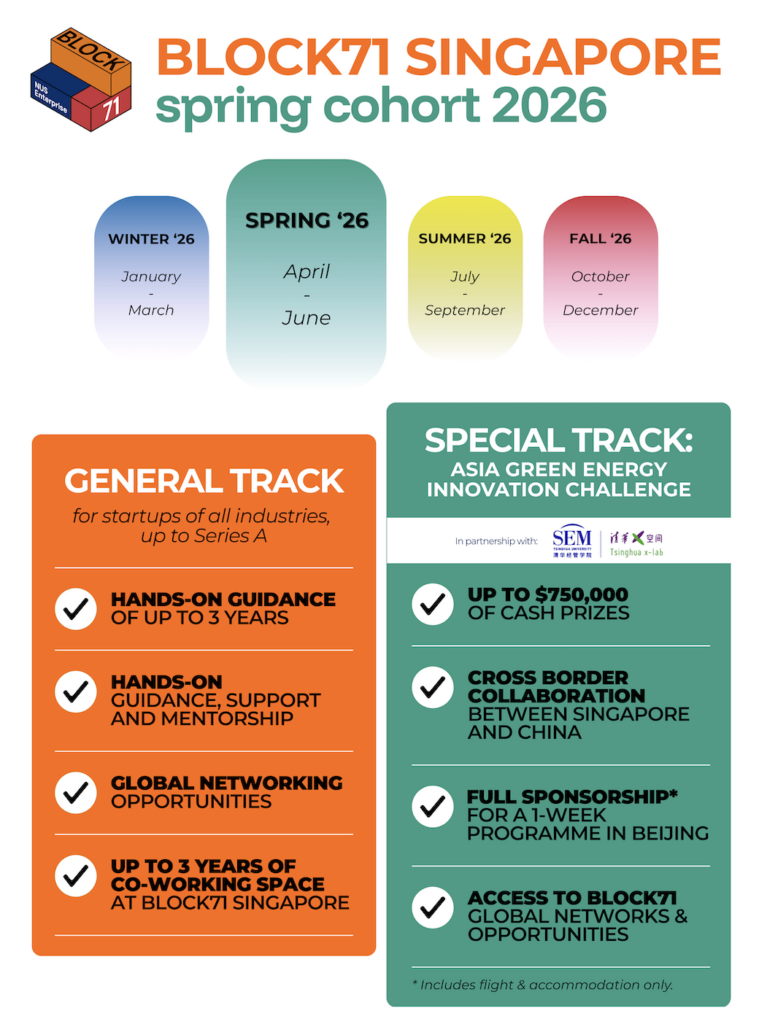
Spring Cohort 2026 Applications Now Open