Your Face. Your Voice. Your Job. Who Owns It in an AI World?
- 19/08/2025
As AI reshapes industries at breakneck speed, we’re witnessing how quickly the promise of efficiency can collide with human consequences. Yet these founders are showing there’s a third path: one where AI amplifies rather than replaces human capability. The question isn’t whether AI will transform your industry, but whether you’ll lead that transformation or be swept along by it.
Sam Altman Warns of AI-Driven Fraud Crisis

OpenAI CEO Sam Altman sounded the alarm on AI-powered fraud at a Washington D.C. banking conference in July, warning that sophisticated voice and video impersonation tools are about to unleash a global crisis. With AI now capable of convincingly mimicking human voices, he called current voice-based authentication methods “crazy” and dangerously obsolete—a wake-up call that should have every founder and fintech executive rethinking their security stack.
The window for proactive action is rapidly closing. As these fraud tools become more accessible and sophisticated, Altman stressed that both public and private sectors must adapt immediately or face crisis-level escalation. With federal AI oversight measures expected soon, the message is clear: the time for reactive security measures is over, and the leaders who move first on AI-resistant authentication will have a crucial competitive advantage in an increasingly dangerous digital landscape.
What this means for founders navigating identity security
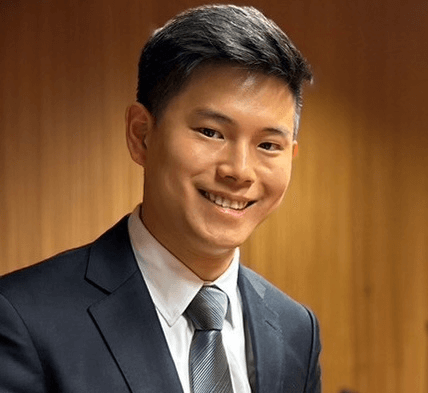
Jeff Hu
Founder & CEO
Turing Space
AI’s breakneck advancement creates a double-edged reality: whilst it organises humanity’s collective knowledge, it also fuels identity fraud through sophisticated fake documents and false claims. As our world becomes increasingly mobile and digital-first, we desperately need secure, user-friendly ways to verify what’s real—especially when it comes to identity.
Digital credentials offer a compelling solution, enabling individuals to carry verified skills and qualifications across borders and systems in a portable, trustworthy format. But this convenience raises critical privacy questions: if governments or third parties control the digital wallets, can they track credential usage? The implications for personal data control and user privacy are profound.
Turing Space is tackling these challenges through our new European headquarters in The Hague, partnering with Dutch authorities to build privacy-first digital identity infrastructure. Our mission: help make the Netherlands a ‘Zero-Fraud Nation’ with trusted credentials spanning education, healthcare, finance, and government. With strategic partnerships and regulatory alignment, this blueprint can scale across the EU, supporting digital sovereignty and creating a more paperless, trust-based society.
Indeed & Glassdoor Cut 1,300 Jobs Amid AI Shift

Japan’s Recruit Holdings is cutting approximately 1,300 jobs—6% of the combined workforce—at Indeed and Glassdoor as part of an AI-driven restructuring. The July redundancies hit R&D, technology, and sustainability teams primarily in the U.S., with Glassdoor’s operations being folded into Indeed’s platform.
The internal memo was blunt about the catalyst: “AI is changing the world, and we must adapt by ensuring our product delivers truly great experiences for job seekers and employers.” It’s a stark reminder that even market leaders in the talent space aren’t immune to AI’s disruptive force—and that adaptation often comes with a human cost.
What this means for the role of AI in recruitment

Agnes Wun
Co-Founder & CEO
Neufast
Neufast’s journey in AI-driven talent acquisition reflects a key lesson we’ve seen play out across the industry—including at companies like Indeed and Glassdoor facing AI-driven restructuring. True innovation in recruitment doesn’t come just from automating processes, but from enhancing human intuition, reducing biases, and fostering genuine connections between employers and talent. Our AI video interview and assessment platform transforms overwhelming hiring challenges into streamlined, equitable opportunities, refined through partnerships across APAC in high-stakes environments from insurance sales to government agencies.
The results demonstrate AI’s potential to augment rather than replace human judgement. A major beverage company used our LLM-powered CV scoring to shortlist top graduate trainees, whilst a government agency cut screening time by 96.8% for 2,000 internship applications — completing evaluations in one afternoon instead of conducting 140 face-to-face interviews. In multilingual APAC markets, clients value how our AI surfaces soft skills in local languages like Malay and Cantonese, whilst our patented PII removal masks identifying details to reduce unconscious bias.
Hiring decisions ultimately come down to the human element: the spark of potential, cultural fit, and emotional intelligence. We don’t see AI as a black box replacement for human judgement—our tools integrate seamlessly with existing HR systems, enabling manual overrides and audit trails that blend data insights with recruiter expertise. This fusion of technological precision and human empathy turns AI from a tool into a trusted partner in building diverse, high-performing teams, proving that the future of recruitment lies in collaboration, not displacement.
Category
News & Article