
How Southeast Asia Can Turn $8B into $120B Before Time Runs Out
- 23/10/2025
The market isn’t waiting. Climate tech in Southeast Asia is shifting from idealism to infrastructure, and biology is entering its prove-it-or-die phase. Capital is tightening, expectations are rising, and the only advantage now is execution at commercial speed. This is where quiet builders outlast loud visionaries.
In this edition, we explore how industry trends are opening doors for those ready to pivot and ways agile founders are staying ahead.
Southeast Asia’s $120B climate opportunity

Southeast Asia has a rare shot at turning climate action into economic momentum. Bain & Company’s Green Economy 2025 report shows that investing in clean energy, EVs, and sustainable agriculture could close nearly 50% of the region’s emissions gap by 2030 – while adding US$120 billion to GDP and creating 900,000 jobs. Agriculture alone could deliver massive emission cuts through sustainable farming and bio-based alternatives, whilst supporting millions of livelihoods.
But there is a gap: the current green investment sits at just US$8 billion annually – far short of the US$50 billion needed to hit 2030 targets. Bain warns “the window to act is narrowing,” but the opportunity is clear: with smart systems, serious financing, and regional collaboration, Southeast Asia can transform climate ambition into lasting economic growth. The demand is there across renewables, EVs, and nature-based solutions – now it’s about mobilising the capital to match it.
What this means for climate tech founders

Dr Hanson Lee
CEO
Green COP Pte. Ltd.
The bioeconomy is accelerating as countries and industries tackle decarbonisation. At Green COP, we’ve been working purposefully to transform agricultural waste into sustainable biobutanol – a drop-in fuel that cuts emissions without overhauling existing infrastructure. As we scale towards 100 tonnes per day at commercial capacity, we stay lean, practical, and collaborative.
Green COP operates as a technology enabler, licensing our proprietary pre-treatment and fermentation platforms whilst supplying customised biocatalysts to help partners convert local agriwaste into sustainable fuels. Real change happens when innovation is decentralised and shared. In Southeast Asia, where biomass is abundant but underutilised, our modular approach enables faster deployment, lower emissions, and greater economic inclusion. Our role isn’t just to lead – it’s to build alongside others, creating an accessible, scalable, and resilient clean fuel ecosystem.
Real progress in climate innovation is often quiet, built through small wins and steady collaboration. As a founder, I’ve learnt to stay patient and grounded in our mission, even when the way forward isn’t clear. Solve real problems, build with intention, and let your work speak for itself. That quiet consistency is what moves the bioeconomy forward.
Fewer Funding Rounds, Bigger Stakes in Biotech 2025

Biotech funding cooled in early 2025, with HSBC reporting global investment dropping from $7 billion in Q1 to $4.8 billion in Q2 – the lowest in over a year. Early-stage rounds took the biggest hit, with first-time financings plunging from $2.6 billion to $900 million as investors shifted to fewer, higher-conviction bets. HSBC calls this a recalibration rather than a retreat, reflecting the market’s growing demand for validated science and clear commercial pathways.
This signals a more disciplined funding environment, not an innovation slowdown. Investors are prioritising proof-points over volume, meaning biotech’s next growth phase will reward teams that combine scientific rigour with sharp execution.
What this means for the biotechnology industry
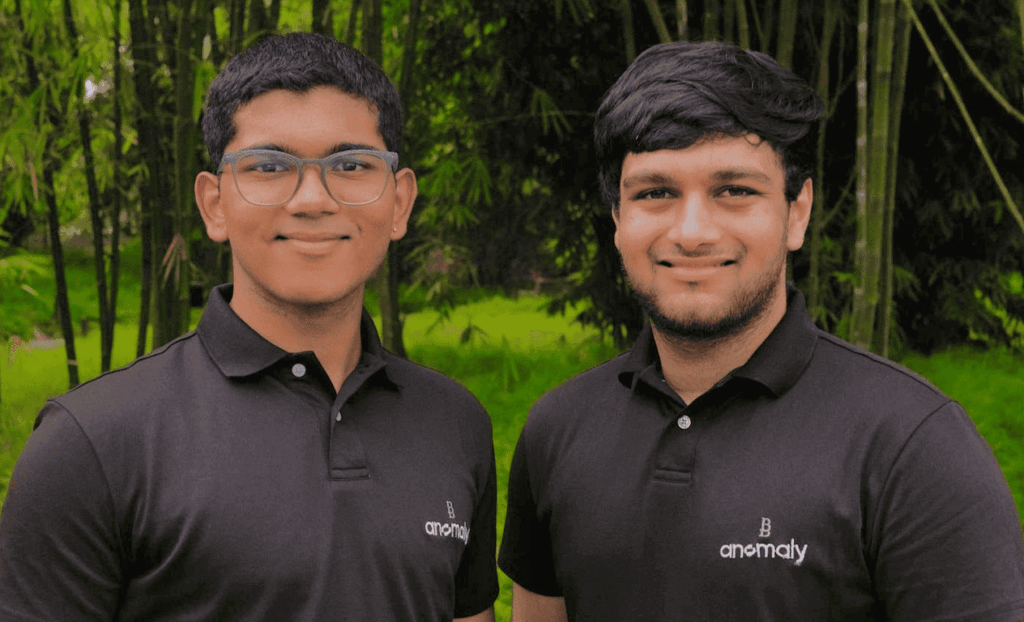
Samyak Baid & Armaan Dhanda
Co-Founders of Anomaly Bio
Industrial biotechnology is at a turning point. After years of rapid growth, the field faces a funding reset driven by high costs, slow commercialisation, and the realisation that great science alone doesn’t guarantee commercial success. The focus is shifting from proving what biology can do to demonstrating it works reliably, affordably, and at scale. The winners will connect research with real-world markets through sharp execution and clear storytelling.
Singapore is responding with strong policy backing, generous government grants, and initiatives like NUS’s $150 million Venture Capital Programme for deep-tech ventures. Challenges around founder ownership and commercial focus remain, but the country’s infrastructure, precision, and regulatory reliability make it a solid base for biotech R&D. With growing late-stage funding and international collaboration, Singapore is positioning itself as a launchpad where science becomes a scalable business.
Industrial bio is becoming more grounded. Investors now demand solutions that generate early revenue, scale efficiently, and outperform existing products significantly. The next generation of leaders won’t just be brilliant scientists—they’ll be builders who make biology useful, scalable, and market-ready. The question is no longer how it’s made, but whether it works better and scales.