
How AI is rewriting the physical world and who's cashing in
- 14/11/2025

Fresh out of Singapore Week of Innovation and Technology (SWITCH) 2025, one theme stood out – the new industrial revolution where AI meets hardware.
We’re seeing it unfold: Alibaba’s $6B robotics push, and AI transforming cancer diagnostics from guesswork to science. The shift to physical AI is happening now.
Alibaba Bets on Embodied AI in $6B Robotics Wave

Robotics startups raised $6B in the first seven months of 2025. After years of trial and error, the fundamentals are finally in place – hardware is cheaper, and startups know what customers want.
Alibaba is betting big. It’s formed a robotics and embodied AI team within its Qwen unit to bring foundation models into physical applications. It also led a $140M round in X Square Robot, while CEO Eddie Wu projects AI investment could hit $4T in five years.
With NVIDIA and SoftBank making similar moves, big tech is signaling one thing: the shift from virtual to physical AI is here.
What this means for founders building in embodied AI
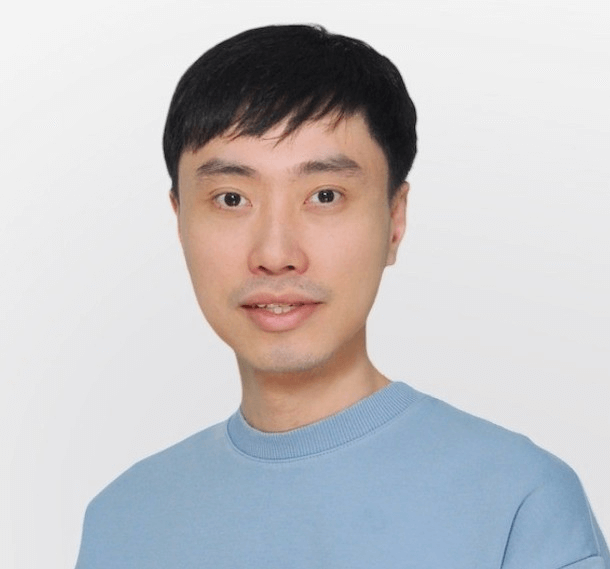
Lucas Ngoo
Founder
Cortex AI
This is the best time to be working on embodied AI – you can already see the signs of life in the field. Over the past year, robotics foundation models from the likes of Physical Intelligence and NVIDIA have shown how quickly the field is moving. Hardware prices are falling, and GPUs are not necessarily the limiting factor as we’re still far from hitting the limits of data scaling in robotics. The main challenge now is scaling up data – not just any kind, but high-quality, egocentric data that helps robots learn by observing humans at work. That data bottleneck is now the biggest limiter of progress in general-purpose robotics.
When companies like Alibaba set up dedicated embodied AI and robotics teams, it sends a positive signal for the whole ecosystem. Around 80% of the world’s GDP still comes from physical labour, so there’s plenty of room for both big tech and startups to contribute. Big companies have the computing power and resources to train large models, while startups like us collect the real-world data they need. The more focus there is on this space, the better it is for everyone – it expands the ecosystem and increases demand for data and testing.
For founders, the fundamentals haven’t changed. Find a niche that big companies aren’t focusing on, or one that complements what they do, and be the best at it. That’s how you grow from small to significant. In our case, that niche is real-world data for robotics, and we’re seeing how important that is to unlock embodied AI’s next phase. It’s still early, and that’s what makes it interesting.
AI Is About to Make Cancer Drug Development Way Smarter

Dr Anthony Chua
Co-Founder & CEO
StratifiCare Pte Ltd
In medicine, time is the most precious resource, and uncertainty is the enemy of value. As AI transforms the future of diagnostics, we’re finally closing that gap between high-cost treatments and predictable outcomes. To me, this is the real frontier of precision medicine: using data to de-risk therapies and give every patient a fairer, faster shot at recovery.
At StratifiCare, we’ve built what I call a Precision Intelligence Layer — an AI-powered blood test that can accurately predict, before treatment begins, whether a liver cancer patient will respond to TARE, a minimally invasive “precision missile” therapy that targets tumours from within. By identifying non-sustained responders early, we help doctors make immediate course corrections, saving those critical months that can change a patient’s prognosis and conserving valuable healthcare dollars.
What excites me is that this isn’t just about improving outcomes; it’s about redefining value in medicine. When AI can turn a high-stakes clinical gamble into a predictable, financially sound pathway, we accelerate not only a patient’s path to cure but the healthcare system’s return on investment. That’s how we de-risk the future of care by putting intelligence at its core.
Great Science Deserves a Great Space
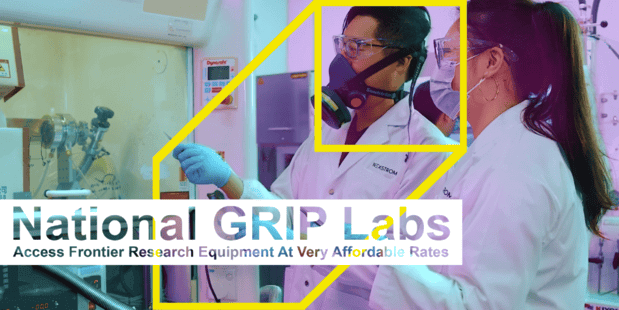
From precision-built infrastructure to collaborative zones, these new labs are made for scientists, researchers and innovators who aim higher.
✅ Sector-agnostic platform supporting local and international deep-tech ventures at all stages—from advanced materials, space tech to biotechnology and food innovation.
✅ Wide range of advanced instruments to meet your specific laboratory needs.
✅ Access super cutting edge equipment from NUS & NTU